
Iron Deficiency Hair Loss or Female Pattern Hair Loss?
For many women, the first sign is small: at some point, the hair tie needs one extra twist to hold a ponytail. Around the same time, climbing stairs leaves you more out of breath than usual, and there are more mornings when you feel briefly dizzy as you get up.
That combination raises a confusing question. Is this iron deficiency hair loss caused by anemia, or is female pattern hair loss progressing on its own? Should you start taking iron supplements, or see a women’s hair loss clinic? Below, we explain how these two causes of a thinning crown differ, and why they are best checked together.
Contents
Iron deficiency hair loss vs. female pattern hair loss: different causes
How each cause changes your hair
How we check when both are present
Treatment at a women’s hair loss clinic depends on the cause
Visiting HairON Clinic from overseas
Iron deficiency hair loss vs. female pattern hair loss: different causes
Female pattern hair loss (FPHL) is a condition in which the hair growth cycle shortens, each strand gradually becomes finer, and density decreases around the part line and crown. After menopause, shifting hormone levels can give DHT relatively more influence on the hair follicles, and these changes may progress as a result.
Iron deficiency hair loss, by contrast, shows up mainly as increased shedding. When iron levels are low, the amount of hair you shed can increase. If you have dieted rapidly or eaten an unbalanced diet, low protein and zinc are also worth examining. When you lose a lot of weight in a short time, the shedding often appears only months later, a pattern known as telogen effluvium. A diet that restricts carbohydrates too severely can also reduce the energy available for hair growth.
There is a reason these two causes are so often discussed together. Shedding from iron deficiency happens across the whole scalp, but the part line and crown, where density may already be lower, are the first places where the scalp shows through. That can make it feel as if crown thinning has suddenly worsened. Conversely, if a woman who already has female pattern hair loss becomes iron deficient through dieting or heavier periods, the extra shedding adds to the thinning, and the change feels much faster.
In short, one cause makes each hair thinner, and the other makes more hair fall out. When HairON Clinic evaluates a thinning crown in women, we first look at how much of each change is present.
How each cause changes your hair
The two causes tend to show up in the hair in different ways.
| – | Female pattern hair loss | Iron deficiency hair loss |
| Main change | Hair becomes finer and density decreases | More hair is shed |
| Area affected | Concentrated at the part line and crown | Tends to appear evenly across the scalp |
| Accompanying signs | Crown hair is finer than hair at the sides | Anemia symptoms such as fatigue and dizziness |
| How it’s checked | Trichoscopy (scalp microscope analysis) to assess thickness and density | Blood test to check iron levels |
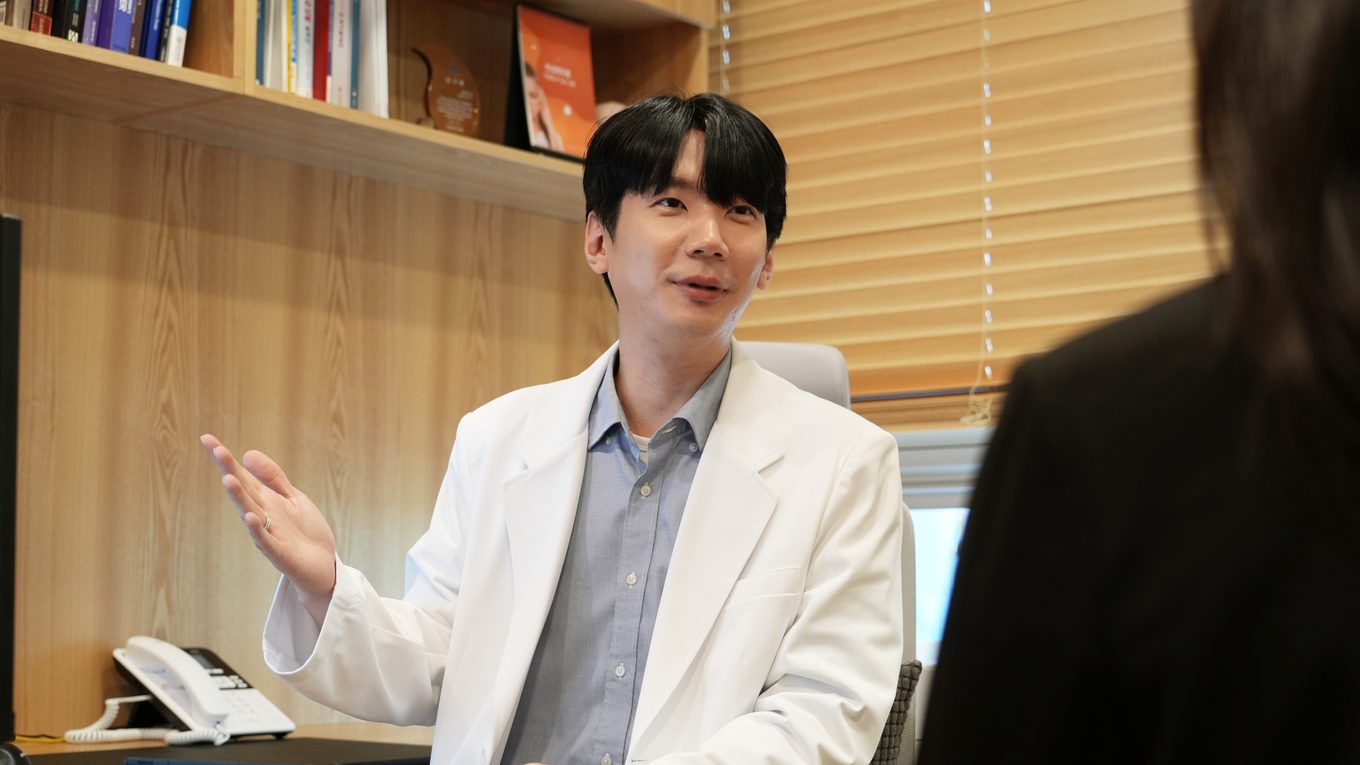
On paper, the two look easy to separate, but in practice they often overlap in the same person. Patients who show us photos of their crown in the consultation room often say something like this:
“My crown has looked a little sparse for a few years, but since I was diagnosed with anemia, the amount of hair I lose every time I wash it has shot up.”
In a case like this, the crown thinning that developed over several years points to a female-pattern change, while the shedding that began around the anemia diagnosis points to the effect of iron deficiency. The timelines differ, too. Female pattern hair loss involves slow thinning over several years, while shedding from iron deficiency usually becomes noticeable two to three months after a trigger such as rapid dieting or blood loss. That is why we ask not only when your crown began to look sparse, but also what changes or events happened in your body in the months before. Rather than assuming a single cause, we check each change separately and identify which one has the greater influence.
“A thinning crown can be the result of two overlapping changes: each hair getting finer, and more hair falling out.”

How we check when both are present
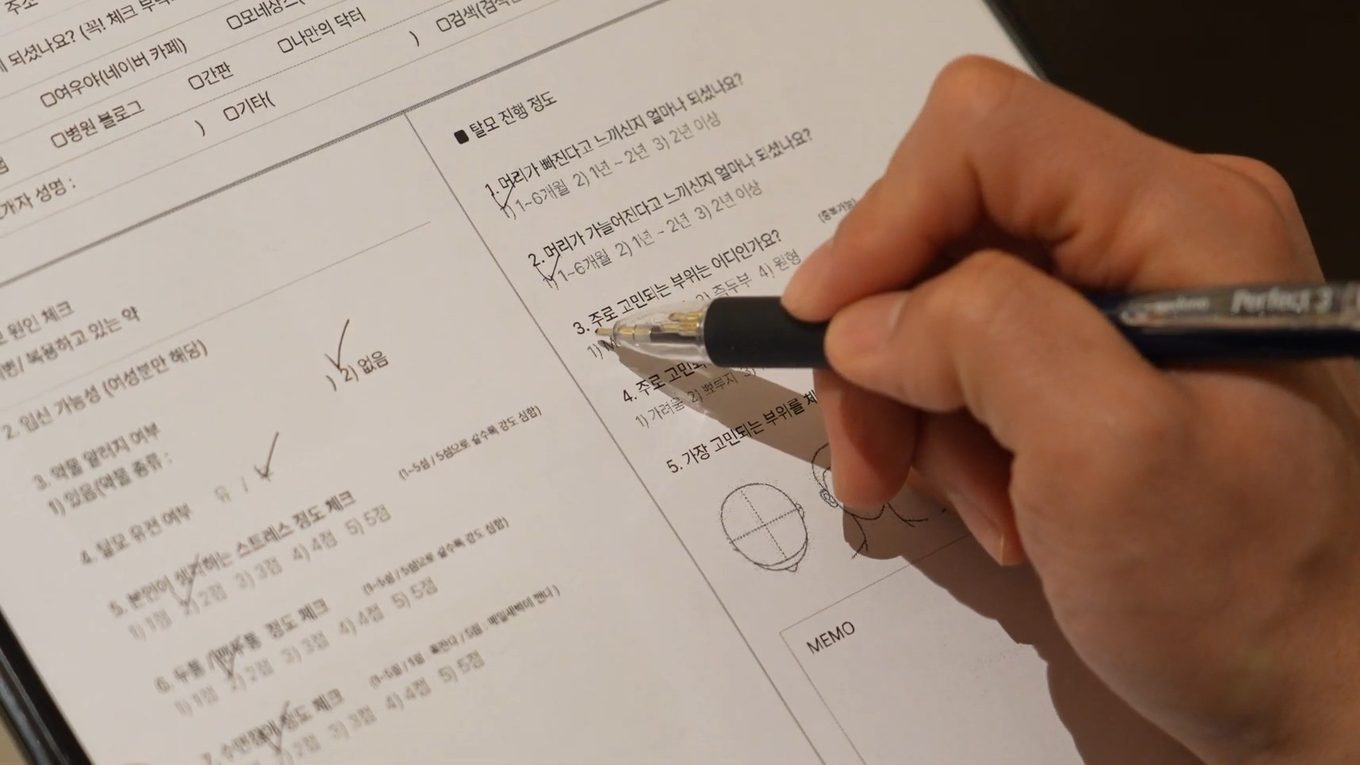
When both causes may be involved, we examine your hair and your overall health with separate tests. First, an internal medicine specialist reviews your questionnaire with you. We ask when the thinning began, whether you have noticed dizziness or fatigue, and about your recent diet and any weight loss. Heavy periods or a recent childbirth can also point to iron deficiency, so we check these during the consultation as well.
If a stressful period coincided with the increase in shedding, an autonomic nervous system (ANS) test is used to look at autonomic balance and stress levels. Changes at the crown are assessed with trichoscopy, a magnified scalp examination. We check whether the crown hair has become finer, whether density has decreased, and how it compares with the surrounding hair.
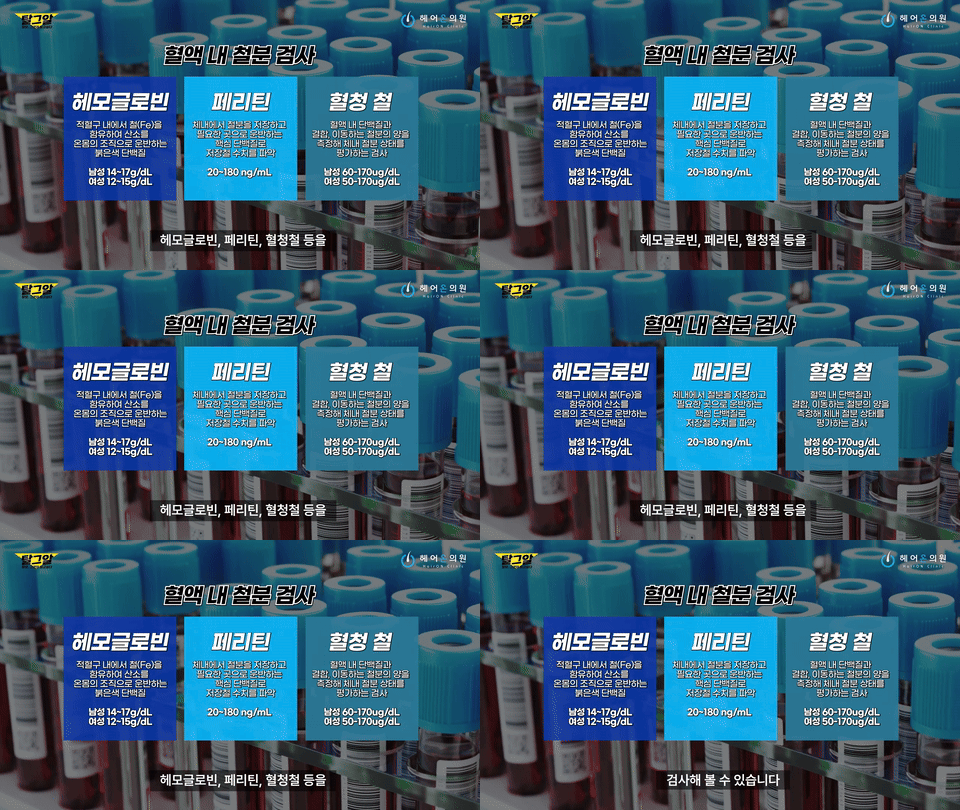
If anemia is suspected or your hair loss pattern differs from the typical case, we add a blood test to evaluate systemic factors, including iron levels. HairON Clinic performs blood tests selectively for patients who need them, rather than for everyone.
Some patients at our women’s hair loss clinic in Seoul ask:
“I already had an anemia test at another clinic. Do I need to do it again here?”
If you already have test results, bring the report with you. We will review it together during the consultation and then decide whether any additional testing is needed. If your results come from a clinic outside Korea, an English copy works well.
Here is a summary of what we check when evaluating crown thinning and iron deficiency hair loss together:
Consultation: when the thinning began; symptoms such as dizziness and fatigue; diet and weight-loss history; menstrual flow and childbirth history
Trichoscopy: the thickness and density of the crown hair, and how it compares with the surrounding hair
ANS test: autonomic balance and stress levels, when a stressful period coincides with increased shedding
Blood test: systemic factors such as iron levels, when anemia is suspected or the pattern differs from the typical case
Treatment at a women’s hair loss clinic depends on the cause
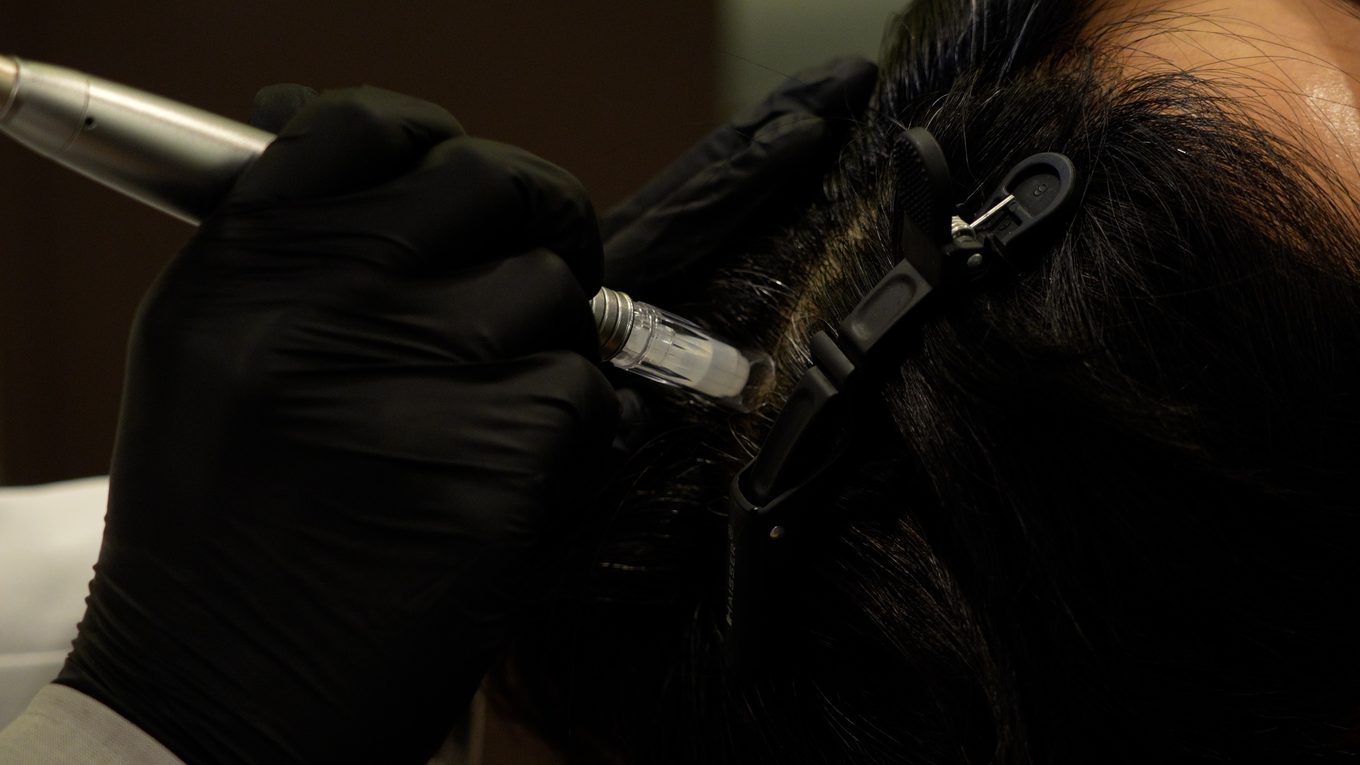
The focus of treatment changes depending on which cause is closer to the root of the problem. At our women’s hair loss clinic, we review your hair and scalp condition, age, the possibility of pregnancy, and menopausal status before deciding on a medication regimen and combination designed for women. Oral and topical medications are adjusted to your condition, and if thinning hair is your main concern, injection treatments can be combined. Depending on your condition, options include the Follion Scalp Injection, which supports the scalp and follicle environment; stem cell hair loss treatment, which aims to activate follicle cells; and scalp Botox, which helps manage scalp muscle tension and blood flow. When iron deficiency is confirmed, our internal medicine specialist reviews the systemic factors during the consultation and builds them into your treatment plan.
When both causes overlap, HairON Clinic combines medication designed for women with injection treatments according to your condition, and reviews your progress regularly. At each review, we check whether shedding has decreased and use trichoscopy to see how the thickness of the crown hair has changed. This lets us confirm how much each change has improved and adjust the treatment direction as needed.
How quickly you notice a change depends on your individual condition, and how well results are maintained also depends on the condition of your scalp and hair. Iron deficiency hair loss and female pattern hair loss are checked together for a simple reason: treatment starts from a different place depending on the cause, and when both are present, the plan has to account for each one. Whether it is one, the other, or both can be confirmed with an accurate diagnosis.
Visiting HairON Clinic from overseas
If you are visiting Seoul and would like to have your hair loss checked, here is what to know before you come.
Location: 3F, Hongwoo Building, 373 Gangnam-daero, Seocho-gu, Seoul. A 2-minute walk (about 60 m) from Gangnam Station Exit 6 (Shinbundang Line).
Hours: Monday–Friday 10:00 AM–8:00 PM; Saturday 10:00 AM–3:00 PM. Lunch break 2:00–3:00 PM.
Your first visit: the consultation and diagnostic tests take about 60 minutes on average.
What to bring: recent blood test results (an English copy if they are from outside Korea), a list of the medications and supplements you take, and older photos of your crown if you have them.
Questions before you visit: message us on WhatsApp (https://api.whatsapp.com/send?phone=821095443536) or call +82-2-6949-2030.
We offer consultations in English. If you are in Seoul for a limited time, let us know your travel dates when you contact us, and we will plan your visit around your schedule.
Related reading
Book a Hair Loss Cause Diagnosis
Gangnam Station (Shinbundang Line) Exit 6 — HairON Clinic After scalp and follicle analysis, we design a customized treatment program tailored to your stage of crown hair loss. Rather than spending time worrying, accurately checking your current condition is the fastest beginning to effective treatment.
Hair Loss Research Center
View All ArticlesFind the Cause Before the Treatment.
Start with an accurate diagnosis at Hairon Clinic near Gangnam Station. Our internal medicine specialists identify the cause of your hair loss and recommend the right treatment based on the findings.
Book DiagnosisHairON ClinicHours of Operation
- Weekdays (Mon–Fri)
- Saturday
- Lunch Break
- Phone Consultation
- 3F, Hongwoo Building, 373 Gangnam-daero, Seocho-gu, Seoul, South Korea
Insights » Hair Loss Treatment by Dr. Hyunggon Son
A First Visit Story: Female Hair Loss in Her 40s at HairON Clinic
Hair loss in women in their 40s may not be simply a sign of aging. If you’re concerned about thinning hair or reduced volume, explore the causes and management options through a first visit to Hairon Clinic.