
Female Hair Loss: 3 Signs That It’s More Than Just Shedding
After the age of 40, many women begin to notice what feels like a sudden increase in hair shedding, especially when washing hair. At this…
After the age of 40, many women begin to notice what feels like a sudden increase in hair shedding, especially when washing hair.
At this stage, temporary shedding due to seasonal changes or a decline in overall condition is also common. For this reason, it is easy to dismiss it as a natural part of aging.
However, not all hair shedding is the same.
In particular, female hair loss is often accompanied by signs that are different from simple hair shedding.
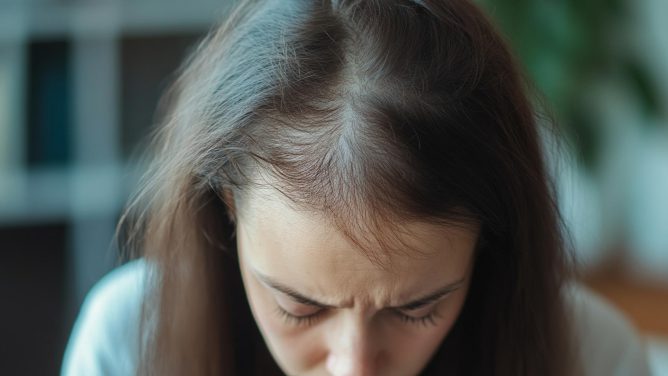
Sign 1.
Hair Density Decreases Before Shedding
With temporary shedding, the main change is usually the amount of hair that falls out over a short period of time.
Female hair loss is different. In many cases, the first noticeable change is not increased shedding, but a gradual loss of hair density.
The part line may start to look wider, or the hair may feel less full when tied back. These changes tend to develop slowly, which is why they are often overlooked in the early stages.
Hair loss does not usually happen all at once. Instead, individual strands become thinner and weaker over time, and may fall out before completing a full growth cycle. As this process continues, overall hair density gradually decreases.
For this reason, changes in hair density are an important sign that helps distinguish female hair loss from temporary shedding or stress-related hair loss.
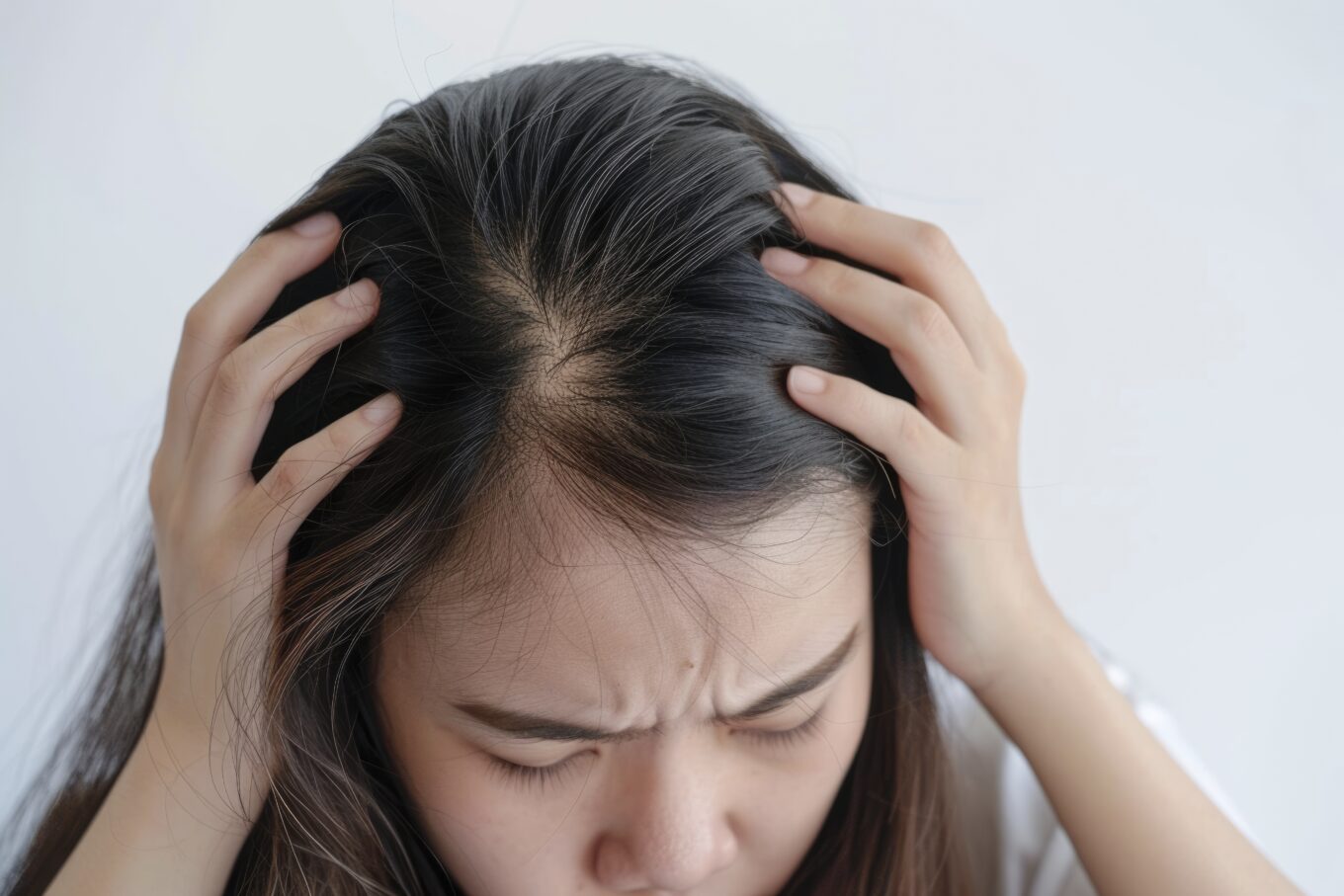
Sign 2.
The Hairline Remains, but the Crown Appears Thinner
When people think of hair loss, they often imagine a receding hairline. That pattern is more typical of male hair loss.
In women, the pattern is different. The hairline is often preserved, while thinning becomes more noticeable at the crown. If the forehead line looks unchanged in the mirror, but the top of the scalp appears more visible than before, this is less likely to be simple shedding. In many cases, the cause is not a single hormonal factor, but a combination of influences — such as hormonal imbalance, aging, nutritional status, and stress.
Because the hairline remains intact, it is easy to assume that everything is normal. However, this can lead to missing an early sign of female hair loss.
Sign 3.
Persistent hair loss following stress
Stress-related hair shedding typically begins after a significant stressful event, with a noticeable increase in hair loss for a period of time. In most cases, it gradually improves on its own as the body recovers.
However, if shedding does not decrease after the stress has resolved—or if there is a continued sense that hair volume is slowly declining—it may indicate that the condition has progressed beyond temporary stress-related shedding.
This is particularly relevant for women in their 40s and beyond, when hormonal fluctuations around perimenopause can interact with stress and act as a trigger for ongoing hair loss.
If hair does not recover even after the stress factor has improved, it is important to consider that the underlying process may have shifted from a temporary response to a more sustained, structural change affecting the hair cycle.
Causes of Female Hair Loss
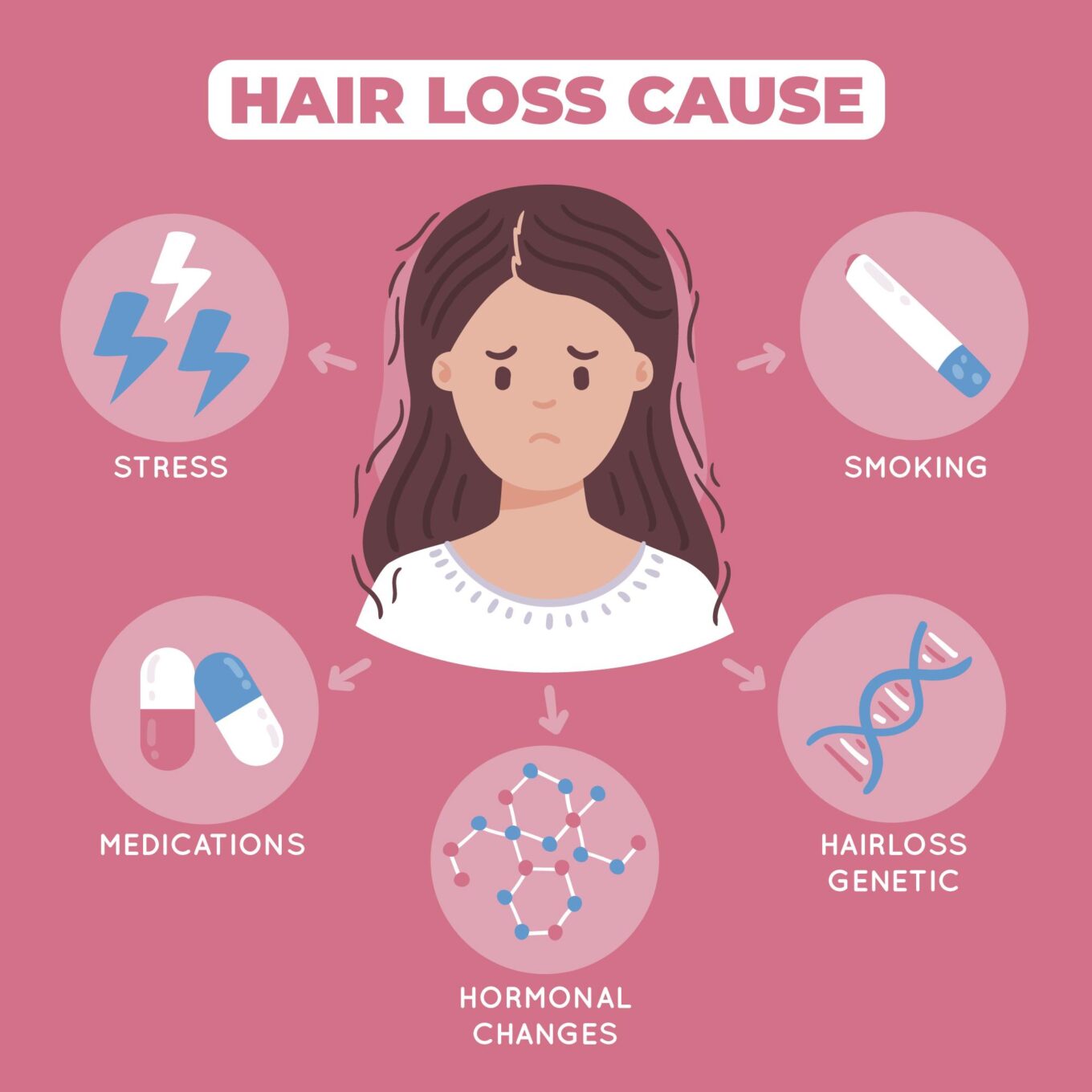
Female hair loss after the age of 40 is not simply a result of aging. It often develops as a consequence of multiple overlapping factors, including declining estrogen levels, changes in thyroid function, poor sleep quality, chronic fatigue, and long-term accumulated stress. Together, these factors can disrupt the environment necessary for healthy hair growth.
1. Hormonal Imbalance-Related Female Hair Loss
One of the primary causes of female hair loss is hormonal imbalance. Estrogen, the primary female hormone, plays a crucial role in maintaining a healthy hair growth cycle. As estrogen levels decline during the perimenopausal and menopausal stages, hair may become progressively thinner and the growth phase of the hair cycle may shorten. As a result, hair sheds before it has sufficient time to grow to its full length, leading to gradual thinning, particularly around the crown. Because this type of hair loss develops slowly with a progressive loss of volume at the top of the scalp, it is often difficult to recognize in its early stages.
2. Chronic Stress-Related Female Hair Loss
Stress-induced hair loss can occur after a sudden period of intense stress, but in women in their 40s, it is more commonly associated with long-term accumulated stress. Persistent sleep deprivation, chronic fatigue, and prolonged emotional tension can reduce blood circulation to the scalp and impair the function of hair follicles. Since this condition is driven by ongoing physiological stress rather than a temporary trigger, simple rest alone is often insufficient for recovery. Effective treatment requires addressing the underlying causes while supporting healthy scalp and follicle function.
3. Nutritional Deficiencies and Medical Conditions-Related Female Hair Loss
Female hair loss can also develop when the body does not receive sufficient nutrients required for healthy hair growth. Factors such as restrictive dieting, an unbalanced diet, and impaired digestive function can limit the delivery of essential nutrients to the hair follicles, leading to increased hair shedding and thinning. In these cases, focusing solely on the scalp is unlikely to produce optimal results. Improving overall nutrition and adopting healthier lifestyle habits are essential components of effective treatment.
Additionally, underlying medical conditions such as thyroid disorders, diabetes, and iron-deficiency anemia can disrupt the normal hair growth cycle and contribute to hair loss. Because these conditions affect the body systemically, scalp treatments alone may not be sufficient. A comprehensive evaluation, including blood tests when appropriate, is important to identify and manage the underlying medical causes while supporting healthy hair regrowth.
4. Female Hair Loss Caused by Improper Hair and Scalp Care
Certain hair care habits can also contribute to female hair loss by weakening the scalp environment and damaging the hair follicles. Frequent hair coloring, repeated chemical perms, excessive scalp irritation, and over-cleansing can all compromise scalp health and increase the risk of hair thinning. When these external stressors occur alongside hormonal imbalance or chronic stress, hair loss may progress more rapidly. Improper hair and scalp care is not only a potential cause of hair loss but can also accelerate its progression, making proper scalp care and healthy hair care practices an important part of long-term hair loss management.
When Is a Hair Loss Evaluation Necessary?
At HairON Clinic, treatment is tailored to each patient through a combination of medication and injection-based therapies depending on the individual condition. However, female hair loss requires a particularly careful approach because multiple factors must be considered, including the type of hair loss, hormonal status, pregnancy, and breastfeeding.
Even when symptoms appear similar, the underlying causes and treatment strategies may differ significantly.
When medication is considered necessary, treatments such as spironolactone or corticosteroids may be used depending on the patient’s condition. However, these medications require careful consideration regarding indications and precautions, and should only be prescribed under medical supervision.
Particularly for women who are pregnant or breastfeeding, medication use requires an even more cautious approach. Rather than pursuing treatment indiscriminately, it is important to first determine which treatment options are appropriate and safe for the current condition.
For this reason, HairON Clinic often prioritizes injection-based therapy over oral medication depending on the condition of the female patient. One representative example is the “CHECK Injection,” a treatment program developed and patented by HairON Clinic that focuses on improving the follicular environment and restoring the hair growth cycle.
Based on extensive clinical experience, the scope of its application continues to expand.
The CHECK Injection program is designed to help hair follicles in the resting or regressive phase recover a healthier growth environment. By directly delivering growth-supportive ingredients into the scalp, the treatment aims to stimulate the body’s natural regenerative response and improve the condition of weakened follicles.
At HairON Clinic, treatment plans are established only after carefully analyzing each patient’s underlying causes and pattern of progression. From determining whether medication is appropriate to selecting injection components and deciding the injection areas and treatment range, every aspect is precisely customized according to the patient’s condition.
This individualized approach allows for a more stable and realistic treatment strategy.
Female hair loss should not be viewed simply as a cosmetic issue involving reduced hair volume. A wide range of factors—including hormonal changes, nutritional status, stress, sleep quality, and overall systemic health—can interact in complex ways.
For this reason, accurately identifying the underlying cause is one of the most important parts of treatment. Ultimately, successful treatment begins not with the symptom itself, but with understanding the underlying factors creating that symptom.
That is why female hair loss treatment should begin with an accurate diagnosis by an experienced medical professional, followed by a step-by-step treatment approach tailored to the patient’s condition.
Based on extensive clinical experience—including complex and high-difficulty cases—HairON Clinic carefully selects and recommends the treatments most appropriate for each patient.
If you have been struggling with hair loss concerns on your own, now may be the time to receive a professional evaluation and better understand your current condition.
If you have any further questions, please feel free to contact us through our website for more information.
Book a Hair Loss Cause Diagnosis
Gangnam Station (Shinbundang Line) Exit 6 — HairON Clinic After scalp and follicle analysis, we design a customized treatment program tailored to your stage of crown hair loss. Rather than spending time worrying, accurately checking your current condition is the fastest beginning to effective treatment.
Hair Loss Research Center
View All ArticlesFind the Cause Before the Treatment.
Start with an accurate diagnosis at Hairon Clinic near Gangnam Station. Our internal medicine specialists identify the cause of your hair loss and recommend the right treatment based on the findings.
Book DiagnosisHairON ClinicHours of Operation
- Weekdays (Mon–Fri)
- Saturday
- Lunch Break
- Phone Consultation
- 3F, Hongwoo Building, 373 Gangnam-daero, Seocho-gu, Seoul, South Korea
Insights » Hair Loss Treatment by Dr. Hyunggon Son
A First Visit Story: Female Hair Loss in Her 40s at HairON Clinic
Hair loss in women in their 40s may not be simply a sign of aging. If you’re concerned about thinning hair or reduced volume, explore the causes and management options through a first visit to Hairon Clinic.