
What is reduced hair density?
Reduced hair density refers to a condition where hair does not necessarily fall out in large amounts, but becomes thinner and weaker as follicle function declines, leading to decreased overall volume without visible bald patches.
How is reduced hair density different from hair loss?
Hair loss typically involves increased shedding or visible bald areas, whereas reduced hair density occurs when the number of hairs may remain similar, but thickness and growth strength decrease, making the hair appear less dense overall.
What are the symptoms of reduced hair density?
If your ponytail feels thinner, overall volume does not hold well, hair lies flat easily due to reduced strength, or you feel your hair is less dense despite minimal shedding, reduced hair density may be suspected.
What are the main causes of reduced hair density?
It is caused by a combination of factors such as stress, sleep deprivation, nutritional deficiency, extreme dieting, hormonal changes, and aging, all of which reduce follicle recovery capacity.
Can reduced hair density be improved?
Since hair follicles are not completely lost, improving underlying causes and maintaining proper care or treatment can help restore the hair growth environment.
What tests are needed when reduced hair density is suspected?
Diagnosis focuses on hair growth function rather than shedding. Evaluations include follicle density and thickness, growth phase ratios, scalp condition assessment, and blood or hormone tests when necessary.
What happens if reduced hair density is left untreated?
If left untreated, follicle function may continue to weaken, increasing the likelihood of progression into crown or part-line hair loss. Early evaluation and management are therefore important.
Symptoms
Not Just Shedding, but Weakened Hair Growth Capacity Reduced Hair Density
“Reduced hair density refers to a condition in which overall hair density and volume gradually decrease, without obvious bald patches or changes in the hairline. If you feel that your hair seems clearly less dense than before, even though it does not feel like “typical hair loss,” it may be a sign that the growth function of your hair follicles has already begun to weaken.”
If You Notice These Changes, You May Be Experiencing Reduced Hair Density
Overall hair volume does not hold well
Hair feels fine and weak, and lies flat easily
There is not much hair shedding, but hair feels less dense
Hairstyling loses volume quickly
Reduced hair density is a change driven more by “reduced growth” than “increased shedding.”
What Is Reduced Hair Density?
"Reduced hair density refers not to a complete loss of hair follicles,
but to a state in which the overall function of each individual follicle has weakened.
The following changes are commonly observed:"
Decreased hair growth rate
Shortened anagen (growth phase)
Increased proportion of telogen (resting phase) hairs
Reduced hair shaft diameter
As a result, even if the number of hairs remains similar,
overall density and volume appear reduced.
overall density and volume appear reduced.
Why Does Reduced Hair Density Have So Many Causes?
Reduced hair density is influenced more broadly by lifestyle and systemic factors than specific types of hair loss.
The following factors may overlap and gradually reduce the regenerative capacity of hair follicles.
The following factors may overlap and gradually reduce the regenerative capacity of hair follicles.
Chronic Stress
Stress causes hair to shift prematurely into the resting phase.
Lack of Sleep
Reduced growth hormone levels weaken follicle recovery ability.
Extreme Dieting
Nutritional deficiency weakens hair production.
Nutritional Deficiency
Lack of iron and vitamins impairs hair growth.
Hormonal Changes
Postpartum changes or menopause can destabilize the hair cycle.
Age-Related Decline in Growth Capacity
As we age, follicle function gradually weakens.
Common Causes of Reduced Hair Density
Reduced hair density is characterized more by “growth reduction” than “increased shedding.”
- Nutritional deficiency – lack of protein, iron, or zinc
- Stress and sleep issues – shortened growth phase, reduced recovery capacity
- Hormonal and internal factors – thyroid or female hormone changes
- Aging – reduced follicle regeneration speed
- Genetic predisposition – early stage before progression into hair loss
Reduced Hair DensityWhat Kind of Care and Treatment May Be Considered?
Reduced hair density is best managed not with aggressive treatment,
but by creating an environment that supports recovery.
but by creating an environment that supports recovery.
Early stage
Lifestyle, nutrition, and scalp care focus
Mid stage
Combined scalp and injection-based treatments
Persistent decline stage
Cause correction + long-term maintenance plan
If addressed in time, reduced hair density is a condition in which progression to hair loss
can be slowed or prevented.
can be slowed or prevented.
Frequently Asked Questions
Hair Loss Research Center
View All Articles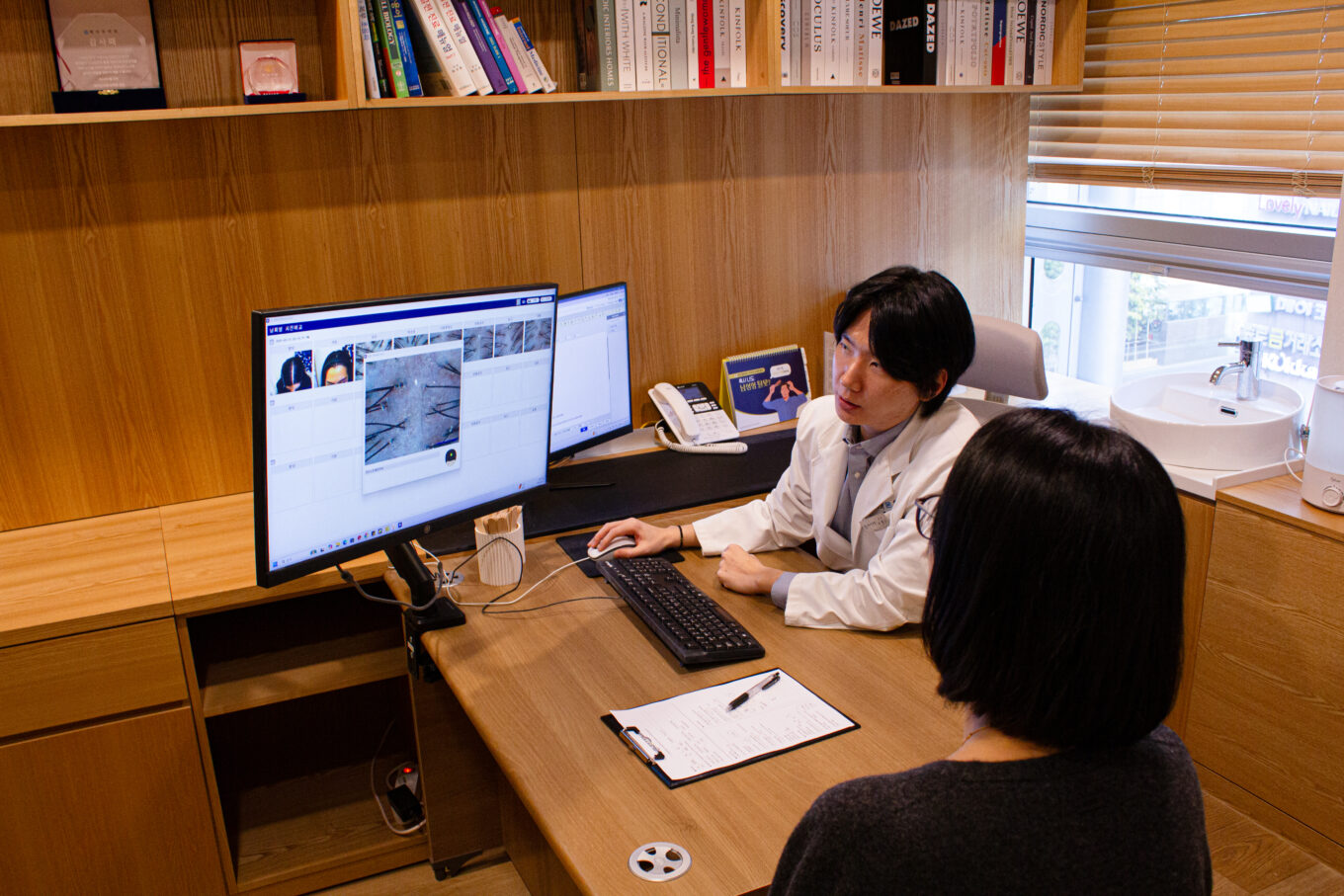
HairON Clinic treats hair loss through an internal medicine-based approach without overtreatment. We spoke with a hair loss specialist about…

I Always Thought Hair Loss Was Someone Else’s Problem I had thick hair since I was young. Whenever I went…
Reduced Hair Density, Check Before It Progresses Into Hair Loss
At HairON Clinic, we first evaluate follicle condition and recovery potential to determine whether current care is sufficient or if medical treatment is needed.
Get Diagnosed for Reduced Hair DensityHairON ClinicHours of Operation
- Weekdays (Mon–Fri)
- Saturday
- Lunch Break
- Phone Consultation
- 3F, Hongwoo Building, 373 Gangnam-daero, Seocho-gu, Seoul, South Korea
Insights » Hair Loss Treatment by Dr. Hyunggon Son
A First Visit Story: Female Hair Loss in Her 40s at HairON Clinic
Hair loss in women in their 40s may not be simply a sign of aging. If you’re concerned about thinning hair or reduced volume, explore the causes and management options through a first visit to Hairon Clinic.