
What is stem cell hair loss treatment?
Stem cell hair loss treatment is a regenerative therapy using stem cells and growth factors to improve weakened follicle environments and support scalp recovery. It activates regenerative responses around follicles and supports reduction of scalp inflammation and entry into the hair growth phase. Rather than creating new hair in areas where follicles are completely lost, it is understood as a treatment that helps existing follicles respond healthily again by improving the scalp environment.
Which types of hair loss is stem cell hair loss treatment effective for?
It can be effective for mid-stage androgenetic hair loss where follicles still remain but function is weakened, cases with insufficient density recovery despite medication, and pre/post hair transplant scalp improvement. However, in advanced hair loss with follicle loss, autoimmune alopecia areata, or acute stress-related hair loss, it may not be a primary treatment and specialist diagnosis is required first. Since it is not applied to all types of hair loss, treatment is determined based on current follicle condition.
How is stem cell hair loss treatment different from PRP treatment?
PRP treatment uses the patient’s own blood to concentrate platelets and growth factors, which are then injected into the scalp. It helps improve the follicle environment and scalp activity and is known as a relatively simple regenerative treatment. Stem cell hair loss treatment focuses on follicle regeneration and scalp recovery environment improvement. It aims for broader management of damaged scalp environment and follicle activation response and is sometimes performed in combination with PRP treatment.
At HairON Clinic, treatment direction is designed after diagnosing scalp condition and hair loss progression.What is the difference between stem cell hair loss treatment and CHECK injection (follicle strengthening injection)?
CHECK injection is a follicle strengthening injection developed by HairON Clinic, which precisely blends growth factors (FGF9 · IGF-1) and nutrients such as biotin to directly supply follicle activation components. Stem cell hair loss treatment focuses on inducing the patient’s own cells to continuously produce growth factors, actively promoting cellular regeneration. The two treatments are complementary and may be used together to enhance follicle activation effects.
How many sessions are needed for stem cell hair loss treatment and when do effects appear?
Stem cell hair loss treatment varies depending on method.
Stem cell monotherapy
Generally performed every 1–2 months, and due to the hair growth cycle, visible effects take about 6 months.
Combination treatment (PRP · medication · injections included)
When combined with growth factor therapy or medication, intensive initial treatment is performed every 2–4 weeks, and recovery may appear faster than monotherapy.
Hair loss treatment varies in number of sessions and intervals depending on follicle remaining status and progression stage, so a personalized plan is established after precise diagnosis.
Does stem cell hair loss treatment have side effects?
Temporary redness, mild swelling, and slight tenderness may occur after treatment, but most resolve naturally within one day. Because it uses autologous PRP-based treatment, burden from external drugs or immune reactions is relatively low. However, treatment methods may vary if scalp inflammation is severe or specific diseases are present, so prior diagnosis is required. At HairON Clinic, scalp condition and comorbid diseases are checked first before determining suitability.
Can stem cell hair loss treatment replace hair transplantation?
In cases where follicles are already lost and empty areas are clearly visible, stem cell treatment cannot create new hair, so hair transplantation is the primary treatment. However, in early to mid-stage hair loss where follicles still remain, it can be used to delay transplantation or improve scalp environment before transplantation. The correct choice depends on accurately identifying current follicle damage stage.
What is the cost of stem cell hair loss treatment?
Treatment cost varies depending on hair loss stage, combination treatment composition (medication, injections, procedures), number of sessions, and intervals. Exact cost is customized after scalp and follicle precise diagnosis, and can be confirmed via visit or online consultation.
Treatment Methods
Treatment That Creates an Environment Where Hair Follicles Can Respond Again Stem Cell Hair Loss Treatment
This is a treatment that goes beyond suppressing the progression of hair loss, and aims to help weakened hair follicles re-enter the hair growth cycle.
If you have the following hair loss concerns, you may consider Stem Cell Hair Loss Treatment.
The hairline feels like it is gradually moving upward.
Hair is thinning and density is decreasing, making the scalp more visible.
Progression is slow, but there are not many completely empty areas.
You want to improve scalp and follicle condition before hair transplantation.
Response to medication or general injection treatments is insufficient.
Stem Cell Hair Loss Treatment is not applied to all types of hair loss. It is a treatment considered when hair follicles still remain but their function has weakened.
What is Stem Cell Hair Loss Treatment?
Stem Cell Hair Loss Treatment uses stem cell-derived growth factors to support follicular cell activity and help restore the scalp environment.
Reactivates weakened follicle activity
Reduces scalp inflammatory responses
Supports entry into the hair growth phase
This is not a treatment that creates new hair in areas where follicles have completely disappeared.
It is more accurate to understand it as a treatment that creates an environment where existing follicles can respond again.
Medical Mechanism of Stem Cell Hair Loss Treatment on Hair Follicles
Stem cell-derived growth factors → follicular cell
signaling
Growth factors such as FGF (fibroblast growth factor), VEGF (vascular endothelial growth factor), and IGF released from stem cells deliver growth signals to follicle cells, improve scalp blood flow, reduce inflammation, and help weakened follicles re-enter the growth phase.
Reduction of scalp inflammation → inhibition of follicle damage
Chronic scalp inflammation is one of the causes that continuously damages the tissue around follicles. Stem cell-derived components suppress inflammatory cytokines, reduce scalp inflammation, and stabilize the environment so follicles are no longer damaged.
Improvement of follicular microenvironment → support for growth phase entry
In addition to growth factors, peptides and regenerative components improve the microenvironment around follicles, helping hair enter the growth phase. When hair loss medication suppresses DHT while stem cell treatment increases scalp responsiveness, recovery effects may be enhanced.
Synergy before and after hair transplantation
Before transplantation, it may be used to improve scalp conditions and increase graft survival rate. After transplantation, it may support the maintenance and recovery of surrounding follicles. Combined use before and after transplantation can help improve both quality and durability of results.
Stem Cell Hair Loss Treatment
Also Requires Diagnosis First
What matters most is not the product name, but how it works and whether it matches your scalp condition.
Genetic /
DHT
Not something you are born with, but a matter of how much it can be delayed
Stress-related /
overwork hair loss
A signal appearing on the scalp due to loss of body balance
Postpartum /
hormonal changes
A condition where rapid hormonal shifts disrupt the hair cycle
Diet /
nutritional deficiency
A condition where hair growth environment collapses due to lack of nutrients
Scalp inflammation /
external irritation
A condition where follicle environment is damaged by inflammation and irritation
Disease /
medication side effects
Hair loss caused by systemic disease and medication effects
Understand different causes of hair loss, and check what treatment is needed according to hair loss type, progression stage, and scalp inflammation status.
"When Stem Cell Hair Loss Treatment Is Effective VS When Other Treatments Are Needed"
When Stem Cell Hair Loss Treatment Is Effective
Androgenetic alopecia in mid-stage where follicles still remain
Cases where progression is controlled by medication but density recovery is insufficient
Before hair transplantation to improve scalp environment
Cases with insufficient response to medication or general injection therapy
In these cases, stem cell treatment can complement drug therapy and increase scalp responsiveness.
Cases where other treatment should be prioritized
Areas where follicles are already lost and clearly empty → hair transplantation first
Alopecia areata (autoimmune) → immune therapy first
Acute stress or disease-related hair loss → cause correction first
HairON ClinicStem Cell Hair Loss Treatment Program
1
Precise
Diagnosis
- Treatment Content
- Main Effect
2
Combination Treatment
Design
- Treatment Content
- Main Effect
3
Autologous PRP
Preparation
- Treatment Content
- Main Effect
4
Scalp
Pre-treatment
- Treatment Content
- Main Effect
5
Growth Factor · Stem Cell Treatment
- Treatment Content
- Main Effect
6
Finishing
Care
- Treatment Content
- Main Effect
7
Long-term Maintenance Management
- Treatment Content
- Main Effect
HairON Clinic Stem Cell Hair Loss Treatment4 Principles
Not applied to all types of hair loss.
Stem cell treatment is only one option among multiple treatments and is not used as a basic treatment. A specialist diagnosis is performed first to determine whether follicles have potential responsiveness. Blood flow supply is relatively low - nutrient delivery efficiency to follicles may be reduced.
Used in combination with medication and injection therapy.
Hair loss medication suppresses progression, while stem cell treatment complements scalp and follicle responsiveness. Combination therapy rather than standalone treatment generally yields better outcomes. External exposure is relatively high - physical damage (styling, pulling) can accumulate easily in this environment.
Hair transplantation strategy is also considered before and after.
Before transplantation, it is used to improve the environment; after transplantation, it is evaluated in terms of graft survival and maintenance. The combination of transplantation and stem cell treatment may contribute to improving transplant quality. External exposure is relatively high - physical damage (styling, pulling) can accumulate easily in this environment.
Does not create excessive expectations.
After fully explaining effectiveness potential and limitations, treatment decisions are made. Not exaggerated claims of “reviving follicles,” but a realistic treatment plan based on current follicle condition is established.
Frequently Asked Questions
Hair Loss Research Center
View all articles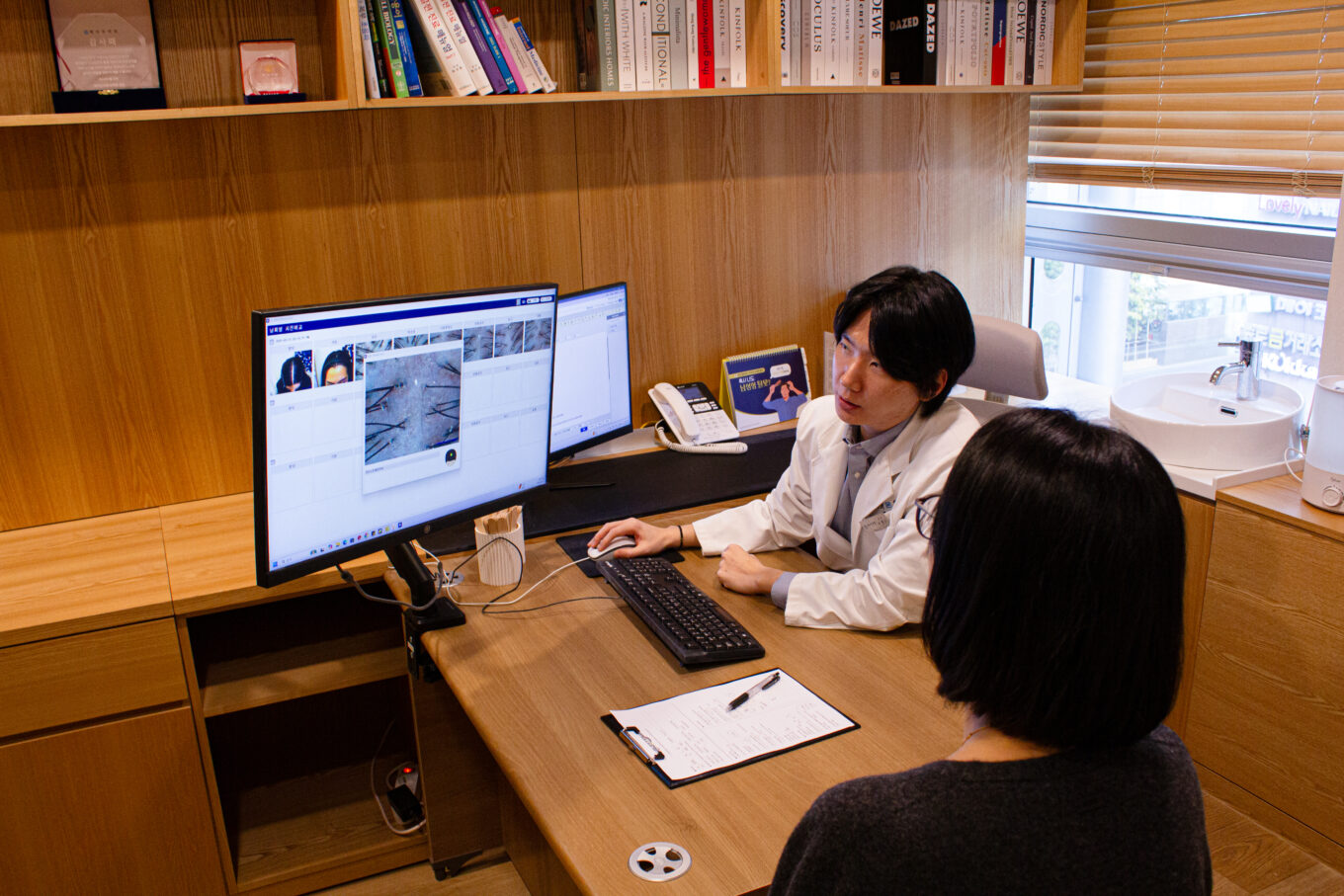
HairON Clinic treats hair loss through an internal medicine-based approach without overtreatment. We spoke with a hair loss specialist about…
Check Your Current Condition Directly.
Hair loss is difficult to judge by feeling alone. At HairON Clinic, we first evaluate the current condition and recovery potential through scalp and follicle tests, and then guide you to the appropriate treatment direction.
Book DiagnosisHairON ClinicHours of Operation
- Weekdays (Mon–Fri)
- Saturday
- Lunch Break
- Phone Consultation
- 3F, Hongwoo Building, 373 Gangnam-daero, Seocho-gu, Seoul, South Korea
Insights » Hair Loss Treatment by Dr. Hyunggon Son
A First Visit Story: Female Hair Loss in Her 40s at HairON Clinic
Hair loss in women in their 40s may not be simply a sign of aging. If you’re concerned about thinning hair or reduced volume, explore the causes and management options through a first visit to Hairon Clinic.