
What are the symptoms of stress-related hair loss?
Sudden shedding of more than 100 hairs per day or a general decrease in hair density rather than localized loss. Scalp tenderness or heat sensation may also occur. The most common early sign is ‘sudden excessive hair shedding’.
When does stress-related hair loss start?
It usually begins 2–3 months after a major stressful event such as exams, job changes, sleep deprivation, sudden dieting, childbirth, illness, or surgery.
Does stress-related hair loss recover naturally?
If the cause is temporary and follicles are not damaged, recovery is possible. However, if stress continues, sleep disorders persist, hormonal imbalance exists, or androgenetic alopecia is also present, a precise diagnosis is necessary before deciding treatment.
Is stress-related hair loss the same as alopecia areata?
They may share triggers, but the pattern differs. Stress-related hair loss typically shows overall thinning, while alopecia areata usually presents as round patchy hair loss. Alopecia areata often involves immune mechanisms and may require more active treatment.
How is stress-related hair loss treated?
Treatment is not limited to simple scalp care. It involves detailed analysis of follicle condition, evaluation of the proportion of telogen hairs, hormone and thyroid assessment, and when necessary, medication or follicle-strengthening treatments. It is important to consider not only stress but also autonomic nervous system, hormonal, and internal medical factors.
How long does stress-related hair loss recovery take?
Although it varies by individual, it generally takes more than 3–6 months. Hair does not regrow immediately because it needs time to re-enter the growth phase. Early treatment may accelerate recovery.
Do I need to take hair loss medication for stress-related hair loss?
Not all cases require hair loss medication. If it is telogen effluvium, treatment focuses on correcting the underlying cause, while medication may be considered if androgenetic alopecia is also present. Medication use should be determined based on the current condition of the hair follicles.
How much does it cost?
Because treatment methods vary depending on the cause of hair loss and the condition of the hair follicles, exact costs can only be provided after an in-person diagnosis at HairON Clinic. In general, customized programs are designed based on a 3–6 month treatment period, minimizing burden through reasonable pricing and various program options. From precision diagnosis to treatment and recurrence prevention, each stage is systematically designed to focus on what is necessary.
Causes
A Signal of Internal Imbalance that Starts From the ScalpStress-related · Overwork-induced Hair Loss
Lack of sleep, excessive tension, chronic fatigue. The warning signs sent by the body also appear on the scalp. Have you experienced major stress within the past 3 months? If so, it may not be simple hair loss, but “neurological hair loss.
If These Apply To You,You Should Suspect Stress- or Overwork-Induced Hair Loss.
Even after sleeping, fatigue is not relieved.
Hair is becoming thinner and weaker.
The scalp feels hot or itchy when stressed.
Hair loss medication shows inconsistent effects.
Before Visiting the Hospital,Is There Anything You Can Adjust on Your Own?
Lack of sleep, excessive tension, chronic fatigue. The warning signs sent by the body also appear on the scalp.
Have you experienced major stress within the past 3 months? If so, it may not be simple hair loss, but “neurological hair loss.
Have you experienced major stress within the past 3 months? If so, it may not be simple hair loss, but “neurological hair loss.
Sleep Rhythm Recovery
- Maintain a consistent sleep–wake schedule of at least 7 hours per day
- Avoid smartphone and light stimulation 1 hour before sleep
- Create a dark sleep environment (supports melatonin secretion)
Stress Relief Routine
- Use breathing exercises or meditation apps to stabilize heart rate
- Take 30+ minute walks, yoga, or warm baths to suppress sympathetic nervous activity
- Reduce caffeine and nicotine intake as they worsen hair loss
Diet for Hair and Nervous System
- Extreme dieting can worsen hair loss
- Maintain a balanced intake of protein and carbohydrates
- Micronutrient deficiencies are a major cause of hair loss
Scalp Care (At Home Level)
- Massage the scalp for 3–5 minutes after washing with lukewarm water
- Use mild silicone-free shampoo to maintain sebum balance
- Minimize use of hair oils, wax, and sprays that clog pores
Stress and Overwork as a Cause of Hair LossMedical Mechanisms
Physiological Effects of Stress on Hair Follicles
Stress is not just an emotional response, but a physiological event that disrupts the entire hormonal system. As a result, it directly affects scalp microcirculation and the hair growth cycle.
Excess Cortisol (Cortisol Overproduction)
Prolonged stress increases cortisol secretion from the adrenal glands, shortening the anagen (growth) phase of hair follicles.
This accelerates the shift from growth phase to resting phase, increasing hair shedding.
Sympathetic Overactivation → Vasoconstriction
When stress activates the sympathetic nervous system, scalp blood vessels constrict, reducing oxygen and nutrient supply to hair follicles.
This is why patients often describe “burning” or “itchy” scalp sensations.
Increased Inflammatory Cytokines
Stress hormones activate inflammatory mediators such as TNF-α and IL-6, increasing scalp inflammation.
This damages the tissue around hair follicles and weakens hair roots.
Why Sleep Deprivation Delays Hair Recovery
Sleep is not just rest—it is the key period for growth hormone and melatonin secretion, which support hair regeneration. Poor sleep quality directly reduces scalp recovery capacity.
Reduced Melatonin → Weakened Growth Signals
Melatonin stimulates follicle growth cells. When sleep is insufficient, melatonin decreases, weakening hair growth signals.
Reduced Growth Hormone (GH) Secretion
Growth hormone is secreted during deep sleep (Non-REM stage 3). Sleep disruption shortens this stage, delaying follicle regeneration.
Impaired Self-Healing System
During sleep, tissue repair and cell regeneration are most active. Sleep deprivation leads to reduced follicle recovery and chronic scalp inflammation.
Brain–Nerve–Scalp Connection(Brain–Scalp Axis)
Recent studies highlight the concept that the scalp is an extension of the nervous system.
In other words, the brain–nervous system–scalp are interconnected, and stress directly affects follicular cell signaling.
HPA Axis (Hypothalamus–Pituitary–Adrenal Axis)
Stress activates a hormonal chain reaction: cortisol increases + melatonin decreases → suppressed hair growth + increased shedding.
Autonomic Nervous System Imbalance (Sympathetic Dominance)
Overactive sympathetic and reduced parasympathetic activity lead to reduced scalp blood flow, increased sebum production, and inflammatory hair loss.
Neuroinflammation
Stress triggers neuropeptides such as Substance P and CGRP, which induce follicular inflammation and may lead to chronic hair loss.
Stress-Related Hair Loss
Cannot Be Solved by Medication Alone
About 60% of hair loss originates from internal factors—nervous system and hormonal imbalance.
Rather than only stimulating hair with medication or injections,
a comprehensive treatment plan addressing scalp, nervous system, and hormonal balance is required.
HairON Clinic Stress-Related
Hair Loss Treatment Program
1
Precision Diagnosis
- Treatment Details
- Main Effects
2
Follicle Strengthening Injection
- Treatment Details
- Main Effects
3
Scalp · Nervous System Balance Care
- Treatment Details
- Main Effects
4
Lifestyle Customized Prescription
- Treatment Details
- Main Effects
Hair Loss Diagnosis and Treatment Methods Differ Depending on the Cause.
Hair loss may appear similar in symptoms, but depending on the cause, the progression pattern and treatment direction can differ. Therefore, if noticeable changes occur, it is important to receive an accurate diagnosis without delay. HairON is a hair loss specialty clinic located in Gangnam that carefully evaluates your current condition and designs a treatment direction tailored to the cause.
Get a Hair Loss Cause DiagnosisFrequently Asked Questions
Hair Loss Research Center
View all articles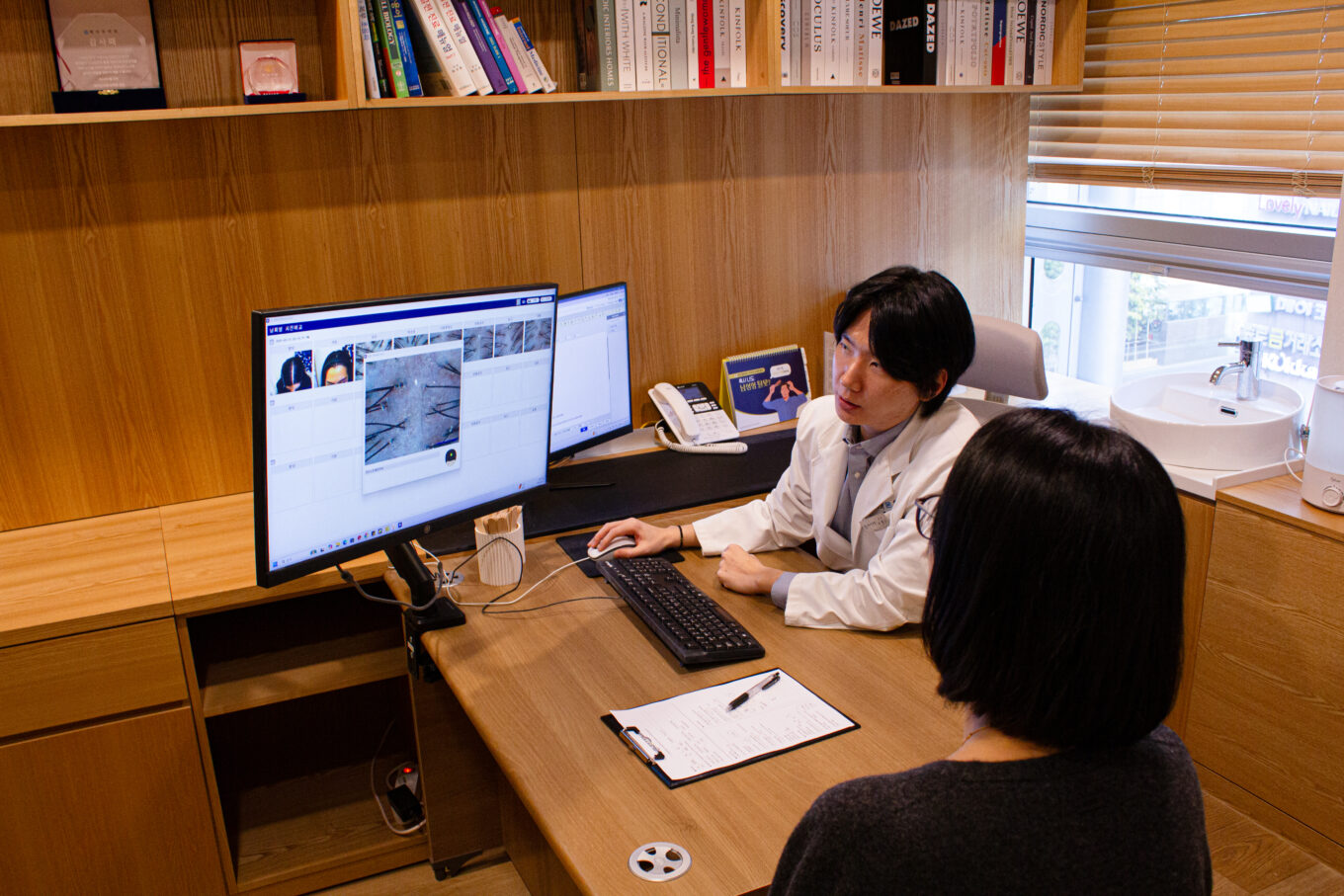
HairON Clinic treats hair loss through an internal medicine-based approach without overtreatment. We spoke with a hair loss specialist about…

I Always Thought Hair Loss Was Someone Else’s Problem I had thick hair since I was young. Whenever I went…
Ultimately, the Key to Hair Loss is Diagnosing the Underlying Cause.
Lack of sleep, excessive tension, chronic fatigue. The warning signs sent by the body also appear on the scalp. Have you experienced major stress within the past 3 months? If so, it may not be simple hair loss, but “neurological hair loss.
Diagnose My Hair Loss Cause NowHairON ClinicHours of Operation
- Weekdays (Mon–Fri)
- Saturday
- Lunch Break
- Phone Consultation
- 3F, Hongwoo Building, 373 Gangnam-daero, Seocho-gu, Seoul, South Korea
Insights » Hair Loss Treatment by Dr. Hyunggon Son
A First Visit Story: Female Hair Loss in Her 40s at HairON Clinic
Hair loss in women in their 40s may not be simply a sign of aging. If you’re concerned about thinning hair or reduced volume, explore the causes and management options through a first visit to Hairon Clinic.