
Traction Alopecia: Is Your Ponytail Thinning Your Hairline? | Hair Loss Clinic in Gangnam, Seoul
When patients tell us their hairline looks wider than it used to, one of the first things we ask is how they usually wear their hair. The answer is often the same:
“I tie it up every day — but can that really cause hair loss?”
If the baby hairs above your temples look sparser in the mirror than they once did, it is worth checking how much your ponytail habit has contributed.
Table of Contents
Why traction alopecia shows up at the hairline first
Is your ponytail the cause? How to tell
Can traction alopecia grow back? Recovery by stage
How we examine the scalp at our hair loss clinic in Gangnam
Treatment for weakened follicles — and the habits to change
Why traction alopecia shows up at the hairline first
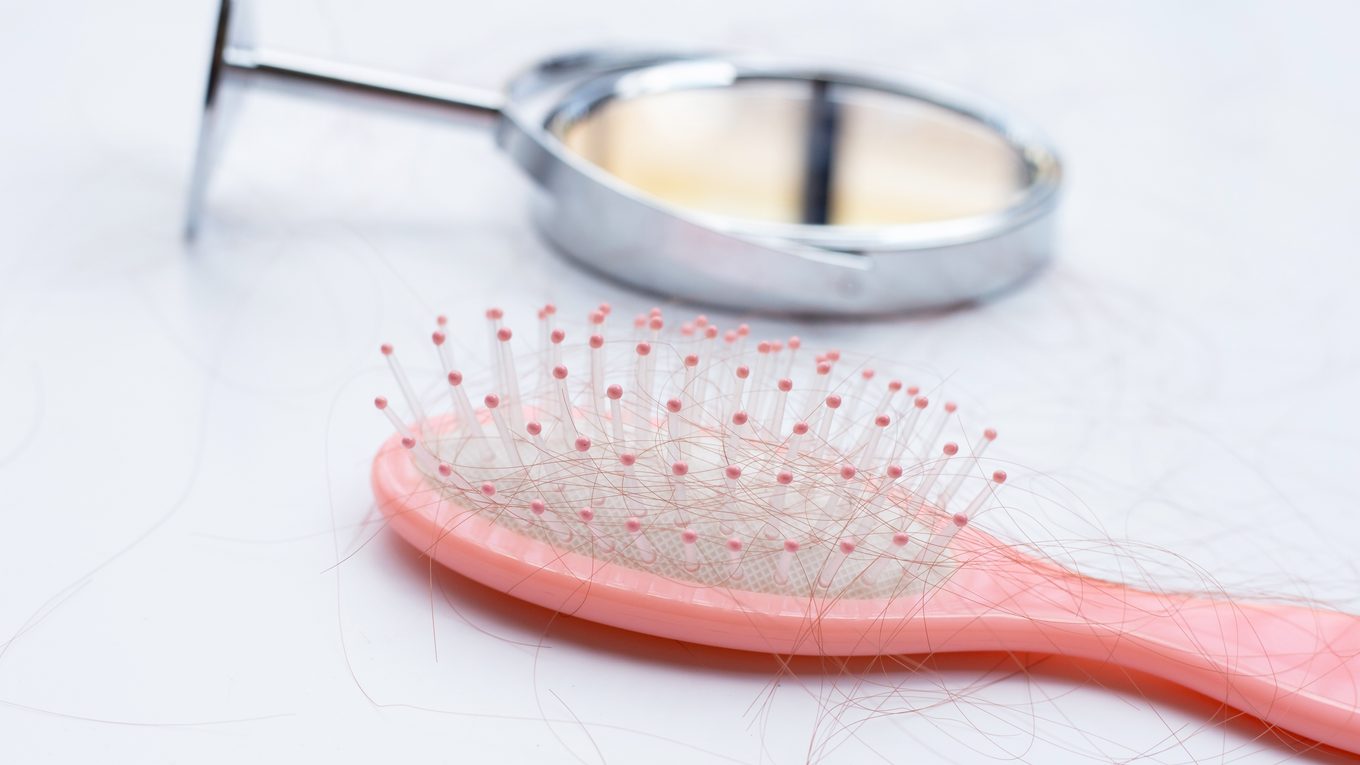
The hairline and temples take the most tension when hair is pulled back. When hair is gathered and tied in one direction, the strands along the edge are pulled taut all the way down to the root. Repeat that every day, and mild inflammation can build up around the follicles. Hair loss caused by this kind of repeated mechanical tension is diagnosed as traction alopecia.
In the early stage, the scalp may turn red or develop small pimples along the line where the hair is tied, and a pulling pain when you tie your hair is often the first symptom. Over time, the hair in that area grows back thinner and shorter, until only fine baby hairs remain along the edge of the hairline.
Is your ponytail the cause? How to tell
The first thing we check is whether the thinning area matches the area that gets pulled. Female hair loss has several possible causes — hormonal changes, telogen effluvium after childbirth or crash dieting, scalp inflammation — and each tends to affect a different part of the scalp.
Hormone-related thinning usually widens the part at the crown. Telogen effluvium causes heavy, even shedding across the whole head. Traction alopecia is different: it stays confined to the hairline, the temples, and the area above the ears — exactly where a ponytail or braid pulls hardest.

Many patients have never thought of their hairstyle as a possible cause. We hear this a lot in consultations:
“I haven’t been dieting and I haven’t had a baby — so why is only the front falling out?”
The longer a tying habit has lasted, the more invisible it becomes, which is why it is usually the last cause anyone thinks of. It is also why the medical history at our clinic includes questions such as how often you tie your hair and when the habit started. To narrow down the cause of hair loss, a record of your daily habits matters as much as the condition of your scalp.

Can traction alopecia grow back? Recovery by stage
The chance of regrowth depends on how far the condition has progressed. Caught early, traction alopecia often recovers with nothing more than a change in how you tie your hair. The commonly recognized stages are summarized in the table below.
Recovery speed depends on how long the hair has been under tension and on the condition of the follicles. In your consultation, we identify which stage applies and set the treatment period from there. For early and progressing cases, treatment starts with changing the way you tie your hair.

How we examine the scalp at our hair loss clinic in Gangnam
The key examination for traction alopecia is scalp trichoscopy. By magnifying the scalp and hair, we can compare hair thickness and density at the hairline and temples against the surrounding areas, and check whether redness or inflammation remains around the follicles.
We combine those findings with your medical history — how often you tie your hair, how high, and for how many years — to judge how far the condition has progressed. An internal medicine specialist also reviews your lifestyle and overall health, so we can check in the same visit whether another cause is overlapping with the tension habit.
One question comes up in almost every consultation:
“If I stop tying my hair, will it grow back on its own — or do I need treatment?”
The answer depends on what trichoscopy shows. If the changes are early-stage — mainly redness and tenderness — correcting the habit is the focus. If a wider area has already thinned, we plan treatment to strengthen the follicle environment alongside it.
Treatment for weakened follicles — and the habits to change
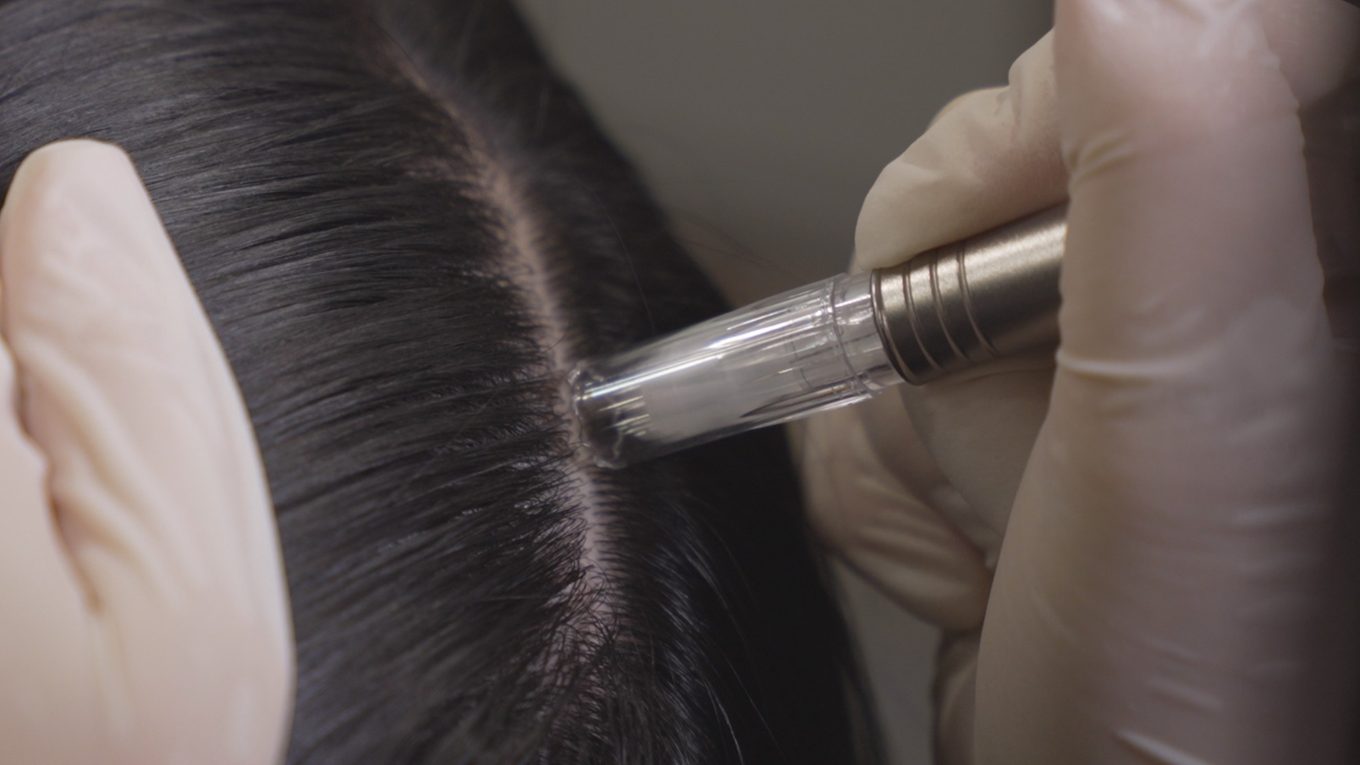
For follicles weakened by prolonged pulling, treatment that supports the growth environment can help. At Hairon Clinic, we pair traction-weakened follicles with our follicle-strengthening Polyon injection. It delivers growth factors and nutrients to the scalp via microneedles or AirMeso; because AirMeso allows the needle depth to be adjusted, the solution can reach the area around follicles weakened by the tying habit. Sessions are usually spaced 2 to 3 weeks apart and can help improve the thickness of thinned hair; the number of sessions depends on how far the condition has progressed and on the findings of your consultation. In some cases, a daily topical scalp solution is used alongside the injections.
Treatment is only half the answer — the tying habit itself also has to change:
Vary the height and position of your ponytail from day to day, so no single area is pulled repeatedly.
Tie your hair loosely, and let it down the moment you feel tension or discomfort in your scalp.
Leave your hair down, or tie it low, a few days each week.

If you would like to gauge how much your hairstyle has affected your hair, start with the free hair loss self-check on the Hairon Clinic website (https://haironclinic.com/self-diagnosis/). If the results show warning signs — or your symptoms continue — visit us to have your scalp and hair examined, your type and stage of hair loss diagnosed, and a treatment and care plan tailored to your individual cause.
Traction alopecia begins to recover from the moment you stop pulling your hair tight; depending on the stage, follicle-strengthening treatment is added. If both sides of your hairline have started to look wider, look at how you tie your hair first — and if the changes continue, have your scalp examined at our hair loss clinic in Gangnam, Seoul.
Book a Hair Loss Cause Diagnosis
Gangnam Station (Shinbundang Line) Exit 6 — HairON Clinic After scalp and follicle analysis, we design a customized treatment program tailored to your stage of crown hair loss. Rather than spending time worrying, accurately checking your current condition is the fastest beginning to effective treatment.
Hair Loss Research Center
View All ArticlesFind the Cause Before the Treatment.
Start with an accurate diagnosis at Hairon Clinic near Gangnam Station. Our internal medicine specialists identify the cause of your hair loss and recommend the right treatment based on the findings.
Book DiagnosisHairON ClinicHours of Operation
- Weekdays (Mon–Fri)
- Saturday
- Lunch Break
- Phone Consultation
- 3F, Hongwoo Building, 373 Gangnam-daero, Seocho-gu, Seoul, South Korea
Insights » Hair Loss Treatment by Dr. Hyunggon Son
A First Visit Story: Female Hair Loss in Her 40s at HairON Clinic
Hair loss in women in their 40s may not be simply a sign of aging. If you’re concerned about thinning hair or reduced volume, explore the causes and management options through a first visit to Hairon Clinic.