
Receding Hairline or Just a Big Forehead? How to Tell
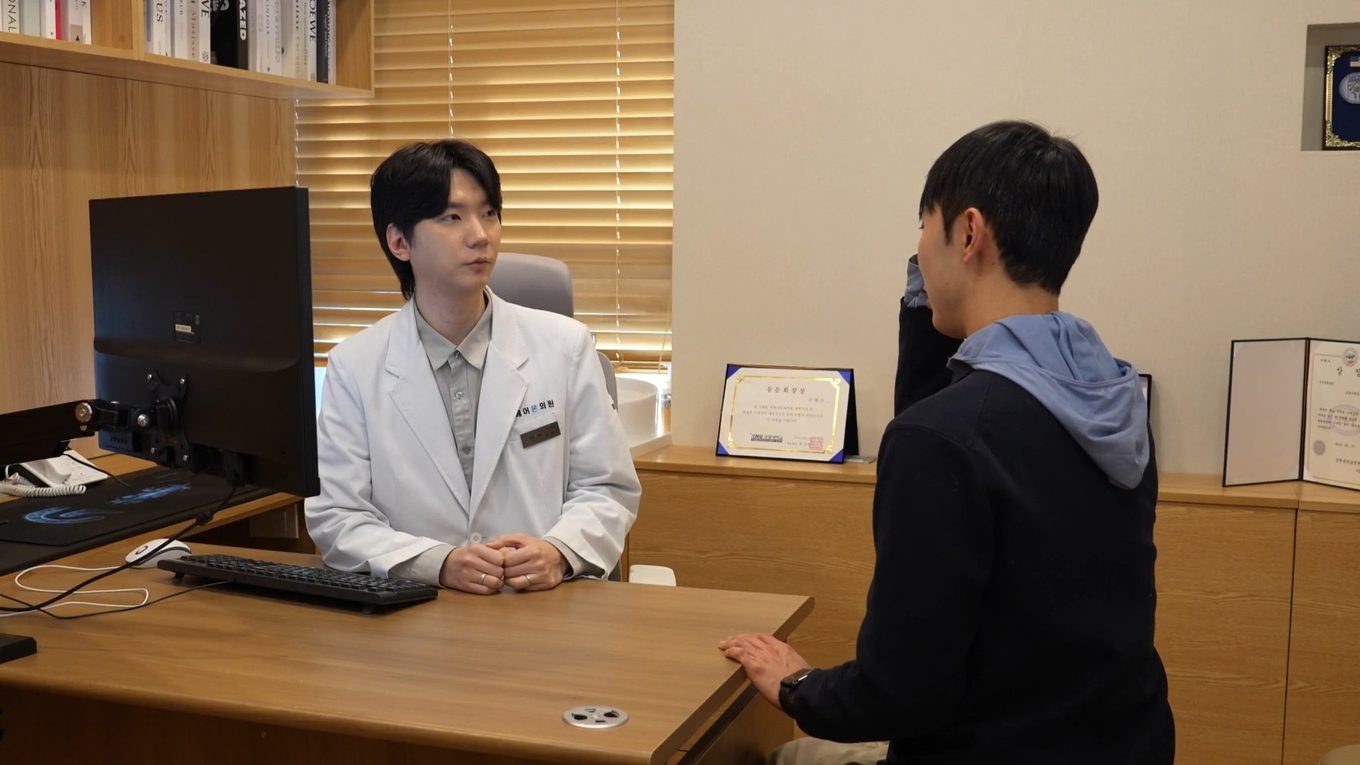
When patients come to HairON Clinic worried that their forehead looks big, we focus first on whether the hairline has moved, not on how wide the forehead is now. A naturally big forehead and an early receding hairline can look similar on the surface, but they are clearly distinguished by whether the hairline has moved back over time.
You have probably lifted your bangs in the mirror and compared your forehead with a photo from a few years ago. Every time a picture is taken, your forehead is the first thing you check, yet it is hard to judge on your own whether it has always looked this way or has recently become wider.
We hear this concern often in the consultation room. A typical one is: “My forehead has always been on the wide side, so I can’t tell whether my hairline is receding.” Below, we lay out how to tell a receding hairline from a big forehead, focusing on changes in the hairline.
Contents
Receding hairline or big forehead: what’s the difference?
5 early signs of a receding hairline you can check at home
Self-check vs. clinical assessment
What we check at our Gangnam Station hair loss clinic
What care follows the assessment
Visiting HairON Clinic from overseas

Receding hairline or big forehead: what’s the difference?
The biggest difference is whether the hairline stays in one place or moves back over time. With a naturally big forehead, the position and shape of the hairline stay almost the same, even when you compare a photo from your school days with one taken today. The forehead itself is wide, but the thickness and density of the hair at the temples are similar to the rest of the scalp.
A receding hairline is different. The follicles along the hairline at the temples are particularly sensitive to DHT, a byproduct of male hormone metabolism, so thinning can appear there before other areas. As these changes build up, the corners of the forehead gradually recede into an M-shaped hairline, and the forehead looks progressively bigger.
“With a big forehead, the hairline stays in place. With a receding hairline, it moves.”
Timing is another useful clue. A naturally big forehead has been that way since childhood, while a receding hairline commonly appears for the first time after puberty or in your 20s and 30s. It is also worth asking whether anyone in your family has had a similar pattern of hair loss. So the question to ask is not “Is my forehead big?” but “Is my hairline moving?”

5 early signs of a receding hairline you can check at home
Go through the items below one by one. The more that apply to you, the more reason to consider the possibility of an early receding hairline.
✔ Compared with a photo from a few years ago, the corners of your forehead have changed shape.
✔ The hair at your temples is noticeably thinner than the hair in the center.
✔ Short, limp baby hairs have increased around your hairline.
✔ Styling your hair swept back feels more awkward than it used to.
✔ Someone in your family has had hair loss that started at the temples.
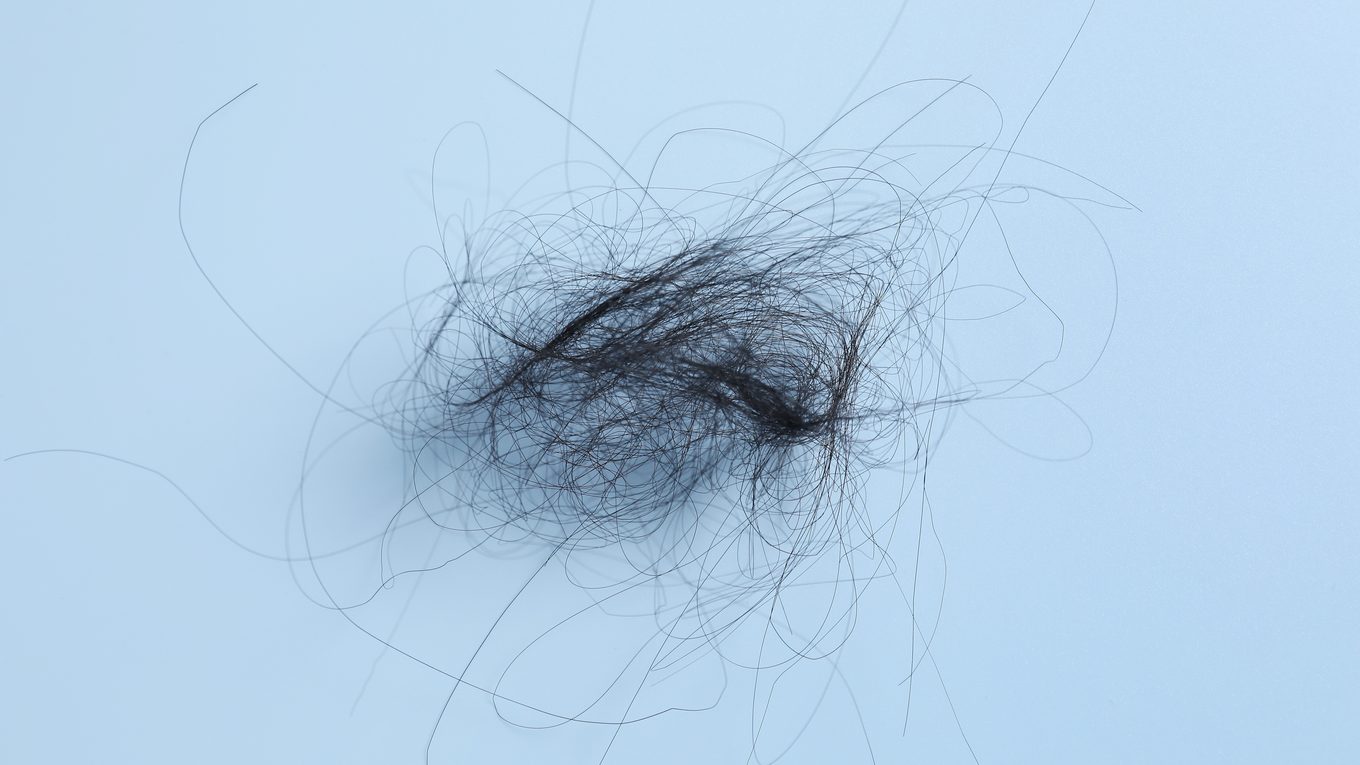
What deserves the closest attention here is the condition of the hair, not the width of the forehead. If the hair at your temples is gradually becoming finer, this may be an early signal that appears before the hairline itself moves.
Many patients tell us, “I’ve been covering it with my bangs, so even I don’t know when it started changing.” If you have spent a long time worrying and searching for answers, we recommend comparing photos rather than relying on memory.

Self-check vs. clinical assessment
A self-check at home is the stage where you pick up clues to an early receding hairline. A clinical assessment is the stage where we look at the cause and degree of progression behind those changes.
| Self-check | Clinical assessment | |
| What is examined | Changes in hairline shape in photos | Hair thickness and density, scalp condition |
| Method | Mirror, comparison with old photos | Questionnaire and consultation, trichoscopy |
| What it tells you | Whether a change has occurred | Contributing factors and degree of progression |
How far the thinning has spread and which factors are involved are confirmed in the consultation.
“A self-check picks up clues to change; a clinical assessment looks at the cause and degree of progression.”
What we check at our Gangnam Station hair loss clinic
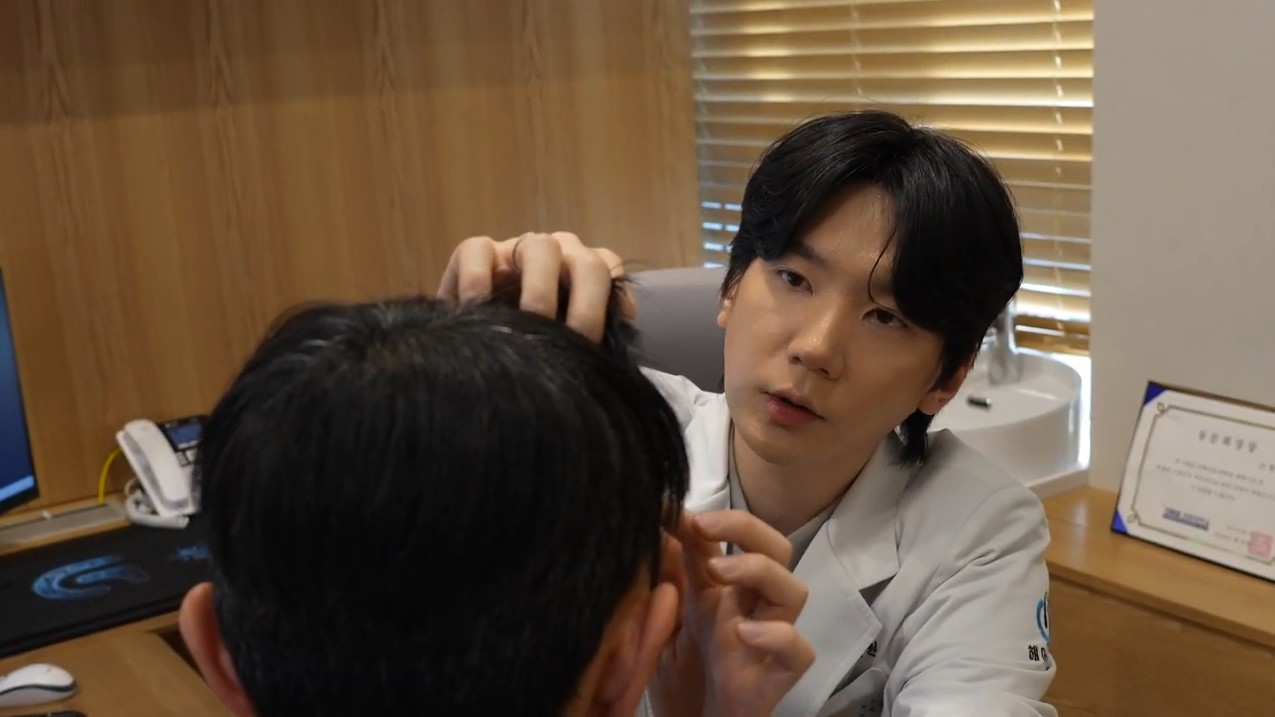
When you visit our Gangnam Station hair loss clinic, an internal medicine specialist at HairON Clinic holds a consultation based on the questionnaire you fill out. We review when the hairline began to change, how the affected area has changed, how it has progressed, and your lifestyle and health.
Next, trichoscopy (a magnified scalp examination) assesses the current condition of your scalp and hair. Because it visually confirms the thickness and density of the hair at the temples and the state of the surrounding hair, it can identify changes that photo comparisons alone cannot capture.
If needed, an autonomic nervous system (ANS) test is also used to look at autonomic balance and stress levels. Stress is a lifestyle factor that can affect hair loss, so it serves as a reference when interpreting how fast the hair loss is progressing.
What care follows the assessment
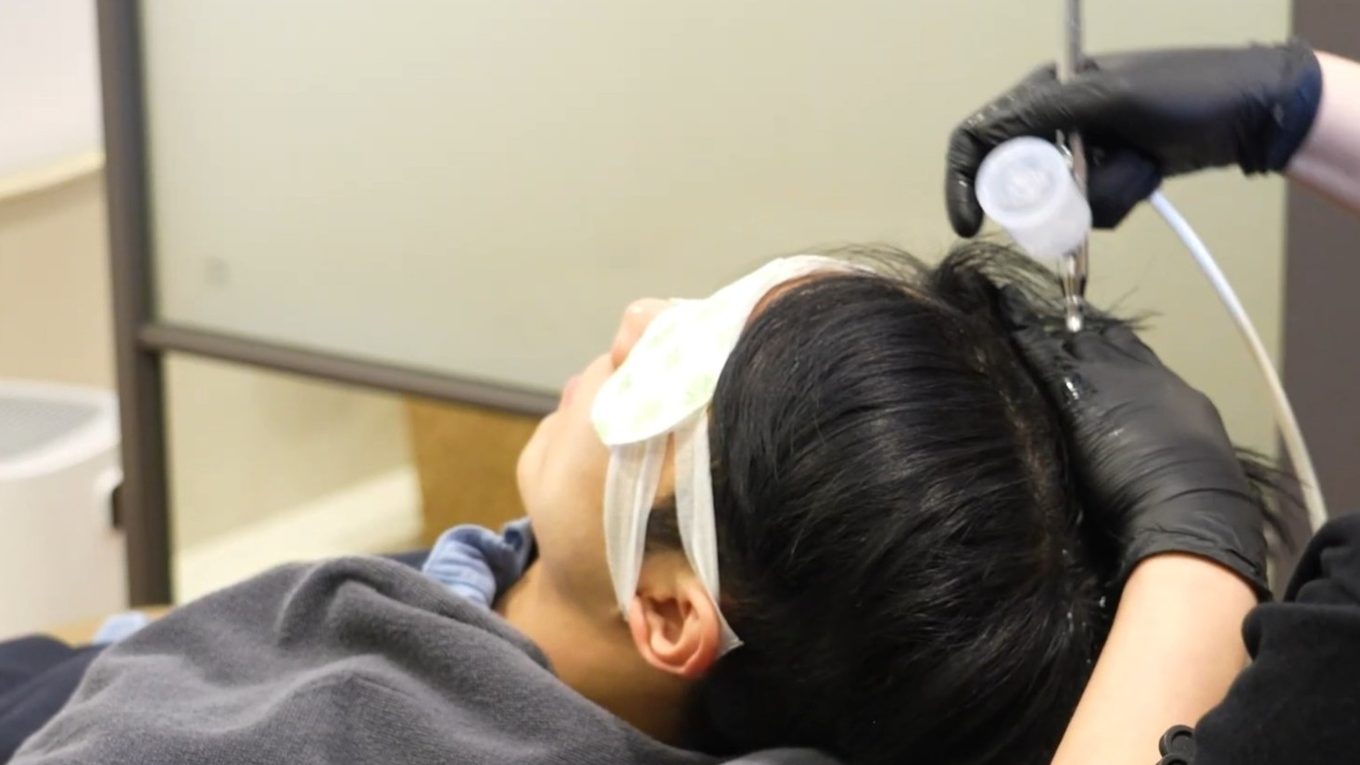
If a receding hairline is confirmed, care aimed at keeping the hair you still have comes first. Oral hair loss medications that act on hormone-related pathways, such as finasteride and dutasteride, are the most common choice. The prescription is tailored after considering your hair and scalp condition, the type of hair loss, your age and your health. The effect lasts as long as you continue taking the medication.
In the early stage of a receding hairline, the Follion Scalp Injection may also be considered. It is HairON Clinic’s follicle-strengthening injection, formulated around PDRN and eight growth factors, and it can help support a weakened follicle environment as part of early hair loss care. The time it takes to notice a difference varies from person to person.

Some patients ask, “My friend saw results with medication. Will it work for me too?” Which approach is right for you depends on the condition confirmed through examination.
If the assessment shows that your forehead is simply naturally wide, it is often enough to record the current state of your hairline and check periodically for changes. If you have been wondering whether your hairline is receding or you just have a big forehead, bring an old photo with you and start by checking for changes in your hairline.
Visiting HairON Clinic from overseas
If you are visiting Seoul and would like to have your hair loss checked, here is what to know before you come.
Location: 3F, Hongwoo Building, 373 Gangnam-daero, Seocho-gu, Seoul. A 2-minute walk (about 60 m) from Gangnam Station Exit 6 (Shinbundang Line).
Hours: Monday–Friday 10:00 AM–8:00 PM; Saturday 10:00 AM–3:00 PM. Lunch break 2:00–3:00 PM.
Your first visit: the consultation and diagnostic tests take about 60 minutes on average.
What to bring: a few photos of your forehead and hairline from past years (from your phone is fine) and any previous test results.
Questions before you visit: message us on WhatsApp (https://api.whatsapp.com/send?phone=821095443536) or call +82-2-6949-2030.
We offer consultations in English. If you are in Seoul for a limited time, let us know your travel dates when you contact us, and we will plan your visit around your schedule.
Related reading
Noticing an M-Shaped Hairline? Is Medication Sufficient? Why Early Treatment Matters
Book a Hair Loss Cause Diagnosis
Gangnam Station (Shinbundang Line) Exit 6 — HairON Clinic After scalp and follicle analysis, we design a customized treatment program tailored to your stage of crown hair loss. Rather than spending time worrying, accurately checking your current condition is the fastest beginning to effective treatment.
Hair Loss Research Center
View All ArticlesFind the Cause Before the Treatment.
Start with an accurate diagnosis at Hairon Clinic near Gangnam Station. Our internal medicine specialists identify the cause of your hair loss and recommend the right treatment based on the findings.
Book DiagnosisHairON ClinicHours of Operation
- Weekdays (Mon–Fri)
- Saturday
- Lunch Break
- Phone Consultation
- 3F, Hongwoo Building, 373 Gangnam-daero, Seocho-gu, Seoul, South Korea
Insights » Hair Loss Treatment by Dr. Hyunggon Son
A First Visit Story: Female Hair Loss in Her 40s at HairON Clinic
Hair loss in women in their 40s may not be simply a sign of aging. If you’re concerned about thinning hair or reduced volume, explore the causes and management options through a first visit to Hairon Clinic.